When Something Just Feels Wrong
Most dog owners know their pet's behaviour well enough to notice when something has shifted; a reluctance to eat, unusual stillness, or movement that isn't quite right. That instinct is worth taking seriously.
In South Africa, where both deliberate baiting and accidental toxic exposure are common, recognising early poisoning symptoms and responding in the correct sequence can significantly affect the outcome of veterinary treatment. The earlier a vet can assess and treat, the more options they have available.
It's also worth noting: many of these symptoms overlap with other conditions. Vomiting might follow a dietary change. Lethargy might mean your dog is simply tired. The key is recognising when multiple signs appear together, when the change is sudden, or when you have any reason to suspect toxic exposure, and acting on that suspicion rather than waiting for certainty.
Early Signs to Watch For
Symptoms vary depending on the toxin, but these are the patterns veterinarians most commonly see in poisoning cases.
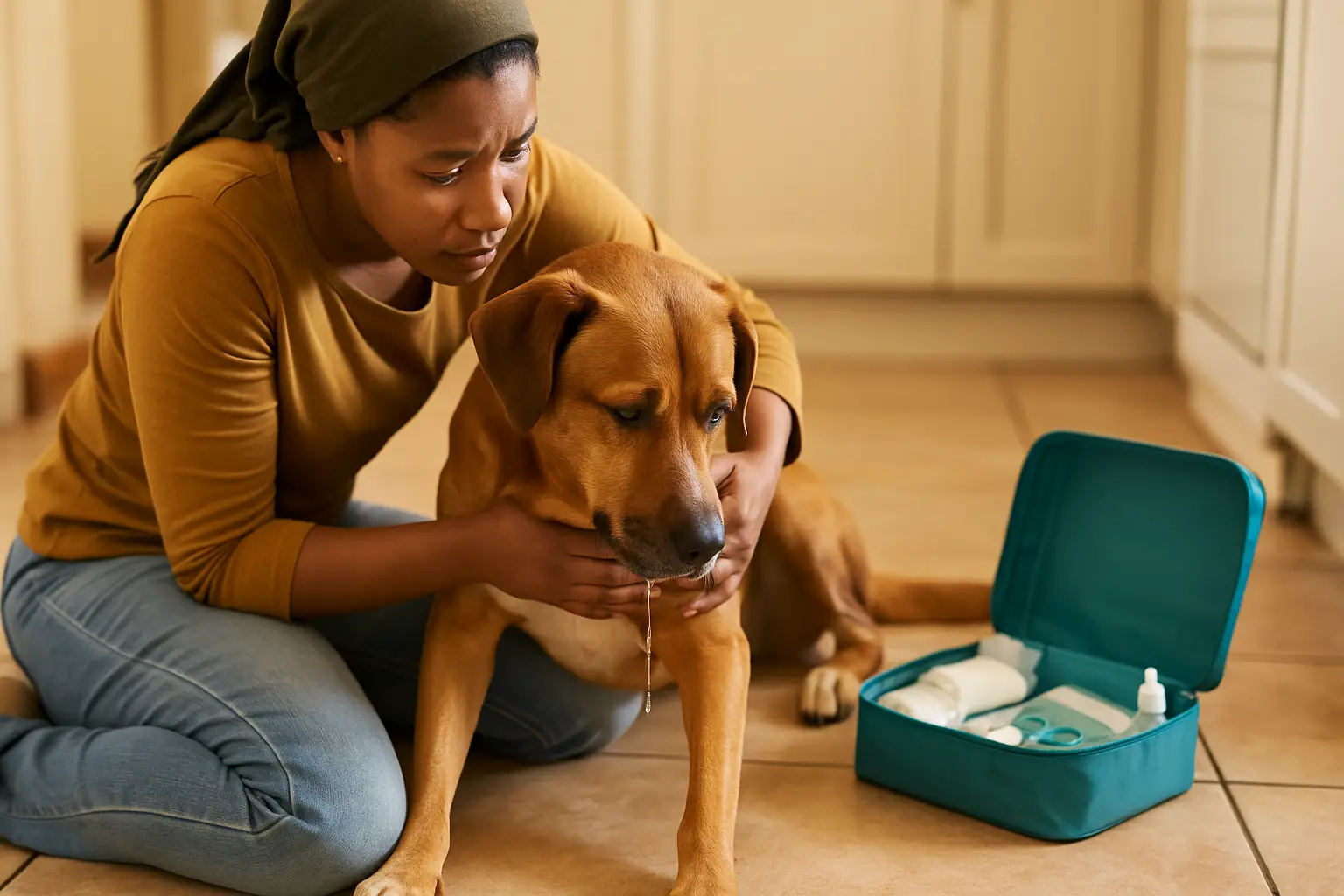
Excessive drooling or foaming at the mouth. A common early reaction to bitter, chemical, or toxic substances. The body increases saliva production in response to oral irritation or nausea.
Vomiting or diarrhoea. The gastrointestinal system's attempt to expel an ingested irritant. Repeated or forceful vomiting, particularly with an unusual odour or blood, warrants immediate attention. Isolated vomiting without other symptoms may not indicate poisoning, but monitor closely.
Weakness, trembling, or loss of coordination. Aldicarb and certain other toxins act quickly on the nervous system, causing muscle tremors, stumbling, or sudden difficulty walking. This is a significant indicator when it appears alongside other symptoms.
Seizures or unresponsiveness. Severe neurological toxins can trigger convulsions or loss of consciousness. If your dog is seizing, do not attempt to restrain them or open their mouth. Clear the immediate area of objects that could cause injury, note how long the episode lasts, and contact a vet immediately.
Laboured or rapid breathing. Respiratory changes may indicate the toxin is affecting the heart or lungs. Shallow, irregular, or noisy breathing requires urgent veterinary attention.
Pale, bluish, or darkened gums. Healthy dog gums are pink and moist. A change in gum colour can indicate oxygen deprivation or circulatory compromise, both possible consequences of certain toxins or anticoagulant poisoning.
Sudden behavioural changes. Pacing, whining, uncharacteristic aggression, or extreme restlessness may appear before physical symptoms do. A dog that is clearly distressed without an obvious cause warrants attention.
What These Signs Don't Mean
Seeing one of these symptoms in isolation does not confirm poisoning. Context matters: has your dog been on an unsupervised walk, had access to the garden unsupervised, or been near areas where bait could have been placed? Have multiple symptoms appeared together, or has the condition deteriorated quickly?
If several signs appear together, or if your dog's condition worsens rapidly, treat it as a suspected poisoning and act accordingly rather than waiting for certainty.
The Correct Response Sequence
The order in which you respond matters. Following the wrong sequence (particularly attempting to induce vomiting before speaking to a vet) can close off treatment options or cause additional harm.
1. Stay calm and assess. Note what symptoms you're observing and roughly when they began.
2. Call your vet or emergency veterinary line immediately. Do this before doing anything else. Describe the symptoms, your estimated timeline, and any information you have about what may have been ingested. Your vet will direct the next steps.
3. Do not induce vomiting unless your vet instructs you to. For certain toxins, inducing vomiting causes additional harm. This decision depends on the substance involved and must be made by a professional.
4. Follow your vet's guidance on first-response measures. If directed to administer activated charcoal, do so with the correct weight-appropriate dose. If you have a PawShield kit, the instruction sequence will guide you through this.
5. Collect a sample if possible. Any remaining bait, packaging, or vomit collected in a sealed bag gives your vet valuable diagnostic information.
6. Transport to veterinary care immediately. Phone ahead so the practice can prepare for your arrival.
Preparation Reduces Improvisation
The hardest part of responding to a suspected poisoning is that it demands clear thinking at exactly the moment clear thinking is most difficult. Knowing the signs in advance, having the correct response sequence already understood, and keeping an emergency kit on hand removes the need to make decisions under pressure.
For a full guide to the emergency response sequence, read: What to Do If Your Dog Is Poisoned.